The Changing Private Office
The private office, a corporate standard in the realm of office planning, is evolving into a nimble tool in strategic workplace models supporting the information economy. Specifically, the private office is becoming more flexible, with characteristics that are responding to changing demographics, emerging technologies and a need to support enterprise performance as well as individual achievement. This paper reviews some of those changes and discusses how to better design and deploy the changing private office in an overall real estate plan.
From Supporting One to Many
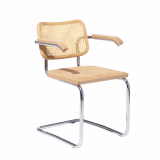
As individuals spend more time away from their primary work space (44% of the time according to recent Knoll research), the private office has become incorporated into a larger real estate strategy: help keep facilities fluid and agile, and provide a place of refuge in an ever-less private open plan environment. Once a destination for one, the private office is now becoming a resource available to many. Today, private office design is centered not only on meeting the primary occupant’s need, but also supporting the needs of a visiting colleague or a small group in need of a private conversation. Those roles becomes more adaptable with a freestanding table, guest chairs and access to group telephony.
An Enduring Role, a Smaller Footprint
Industries that are laden with private offices do so more out of cultural requirements than any functional demand. The office makes the statement about who they are as well as what they do. It sets that cultural imprint that transcends the organization. The functional demand for the private office is based on the premise of supporting focused work. The cultural requirement goes beyond that literal need. In certain industries the private office is still the center, the hub through which a myriad of activities flow. Lawyers set their tone from there and establish the cultural model for the firm’s facility. The private office embodies either the formal or casual nature of the firm.
However, the definition of the private office is shifting. It is less about size and more about functioning as a high performance tool for the organization. As the commitment to collaboration grows, the private office must support that model – and many times that means giving up square footage to other functions. Viewed in a historical perspective, the private office has realized 10 – 20% reduction in size over the past five years, with a 150 square foot office a convenient size for many applications. While smaller, the newer model is still large enough for an ample primary work surface and credenza for both user and visitors.
The Emergence of the Universal Office
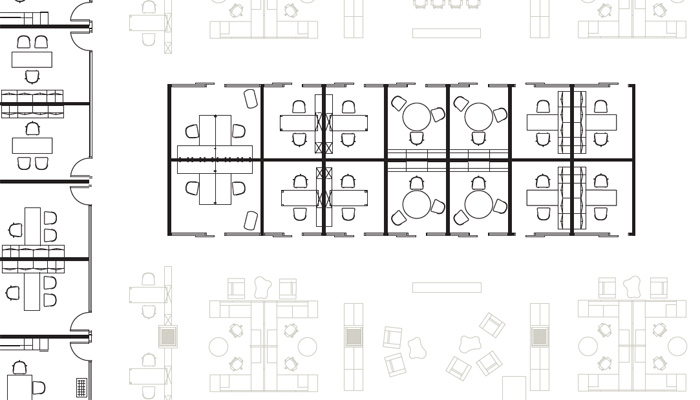
Across industries, the real estate equation is changing from a more static, custom sized solution to a more universal module. By scaling furnishings to reflect the standing of the occupant, the universal office is a more flexible model in serving an ever changing organizational structure. Universal office sizes vary across industries, with 180 square feet a good starting point, scaling down or up according to the building and the culture. That universal size model allows the organization to not only change occupant, but to also change function to team or conference room.
Technology Is Integral
In the open plan, systems furniture provides an efficient tie to the building’s technology infrastructure; today, private office furnishings must do the same for the enclosed office.
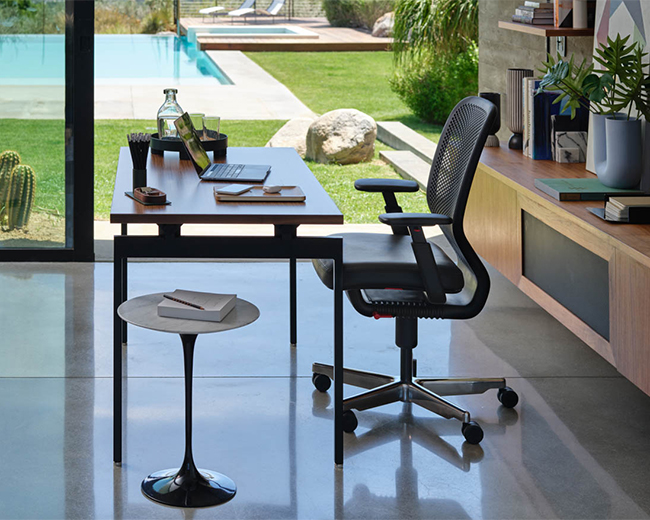
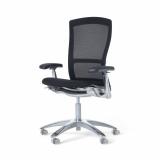
Technology is placing new demands on the private office by requiring better access to power, data and communications. That need is being met by defining work wall areas that support a rich technology platform, served by desktop outlets or ready access to wall outlets. Docking stations and intuitive wire management are now requirements, supporting the increased mobility of private office users. With the ever growing size of computer displays, monitor arms enable the shared review of documents and information, and allow the display to be pushed away when not in use. Adjustable task lighting is more critical to support both increased use of computer displays and ever-shifting activity within the office.
The Multiple Facets of Storage and Organization
Storage plays a unique role in the planning of the private office. Among the requirements, planners need to consider the archival, the confidential and the personal. In addition, the display of materials, resources and objects is a key function in today’s office. Striking a new balance between the open and the enclosed, what should be seen and what should be placed away, helps provide the template for better organization within the private office.
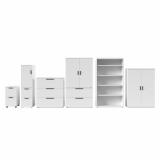
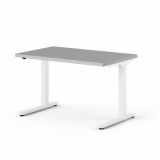
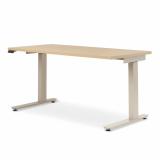
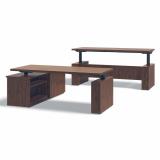
While storage solutions typically reflect the functional or industry needs of the occupant, the private office planner must consider four general zones: visually accessible desktop management and cubby storage for key materials; overhead storage for binders and books; below-worksurface storage for files and other materials; and an adjacent storage tower for coats and personal items. For paper- and material-intensive occupants, storage requirements often include a double-tiered overhead and ample lateral files for legal-sized filing. At the other end of the spectrum, technology-oriented workers may need nothing more than a classic table desk and a low credenza.
The Transparent Office
Transparency, sustainability, and access to natural light are influencing the design of the private office. Transparency is both symbolic and literal: symbolic as organizations express the desire to be more visibly accountable to the outside and literally as a means to innovating and developing cross-disciplinary teams.
Access to natural light is influencing material selections for the inward facing partitions of the office. Glass is becoming the material of choice for office fronts, whether the office is along the core thus allowing a sight line to windows, or along the window line permitting natural light to penetrate to the core. The ability to see outside is important to today’s workforce. In perimeter offices, shallow work walls on the side wall, a visually light table desk, and unobstructed windows are common tactics to maximize natural light into the building’s core.
Transparency is also an attribute of facilities focused on sustainability and LEED certification. That drive toward sustainability is influencing material choice and the simple functions of devices such as sensor based light switches and compact fluorescent lamps. Forest Stewardship Council (FSC) woods are being specified along with low VOC materials that cover everything from the substrates to veneers.
A Corporate Standard
In increasingly open work environments, the private office endures. Indeed, in symbol and need, the private office remains an important facet of the twenty-first century workplace. The balance between the open and the enclosed has shifted more toward the open, but the significance of the private office remains. However, the office is being transformed from a static, stand alone space to a more nimble component of a holistic real estate model serving a variety of needs with a variety of settings.
DOWNLOAD "THE CHANGING PRIVATE OFFICE" TO READ THE FULL PAPER